Mostrando las entradas para la consulta equipment ordenadas por fecha. Ordenar por relevancia Mostrar todas las entradas

sábado, 17 de agosto de 2024

The Risks of Contracting Monkeypox at the Gym: What You Need to Know


Monkeypox
is a rare viral disease that has gained attention in recent years due to outbreaks in various parts of the world. Although most cases have been limited to specific population groups and situations, it's natural to wonder if high-traffic places like gyms could pose a risk of infection.


What is Monkeypox?

Monkeypox is a disease caused by a virus from the same family as smallpox, though it is much less severe. It is primarily transmitted through direct contact with bodily fluids, skin lesions, or contaminated surfaces, as well as through respiratory droplets at short distances.


Transmission Mechanisms

To understand the risk at a gym, it's important to consider how monkeypox is transmitted:


Direct contact: The highest risk comes from direct contact with the skin or lesions of an infected person. In a gym, this type of contact could occur if shared equipment is used without proper cleaning or if there is close physical contact during certain activities.

Contaminated surfaces: The virus can survive on surfaces such as exercise machines, weights, mats, or towels. If someone infected touches a surface and another person comes into contact with that same area, there is a potential risk of transmission.

Respiratory droplets: While airborne transmission is less common and generally requires prolonged face-to-face contact, it is still a possibility in crowded and enclosed spaces like gyms.


Factors That Increase the Risk at the Gym

High usage frequency: Gyms are places where many people share equipment and spaces. If proper cleaning practices are not followed, this can increase the risk of the virus spreading.

Inadequate hygiene: Poor hygiene, such as not washing hands regularly, not disinfecting equipment before and after use, or not showering after exercise, can facilitate transmission.

Enclosed and poorly ventilated spaces: Poor ventilation in enclosed areas can increase the risk of transmission through respiratory droplets, especially in areas where high-intensity exercises are performed.


Measures to Reduce the Risk

To minimize the risk of contracting monkeypox at the gym, it's important to follow some recommendations:

Regular disinfection: Always clean and disinfect equipment before and after use. Bring your own towels and sterilize surfaces you will come into contact with.

Personal hygiene: Wash your hands frequently and avoid touching your face. Change clothes immediately after working out and shower as soon as possible.

Social distancing: Maintain a safe distance from other users when possible, especially in areas where high-intensity exercises are performed.

Use of personal equipment: If possible, bring your own equipment, such as yoga mats, small weights, or resistance bands, to avoid sharing objects with others.


While the risk of contracting monkeypox at a gym exists, it can be minimized with good hygiene practices and precautions. Stay informed about public health recommendations and take steps to protect yourself and others. If you experience symptoms or believe you have been in contact with someone infected, consult a healthcare professional and avoid going to the gym until you are sure you do not pose a risk to others. | X | WhatsApp | chulucanasgym@gmail.com


viernes, 22 de octubre de 2021

Dancing for pure pleasure

While we attend one of his classes, we run along his story marked by triumph.


7:25 in the morning. The class doesn’t start yet. They’re just some dudes who use the machines room at the gym. Mrs. Cruz “Cucha” Castillo begins to putt he steps waiting for the pupils (more female, actually) of every morning. The sound equipment is tuned on a local station broadcasting some music and news while the Sun strains through the windows. It’s Rosmy Gym, in Jardin, West Sullana City, Peru, and everybody is waiting for Cristian reyes, the aerobics trainer who is going to give his first class of the day.


The life between his birthday, an August 29th, 1984, in Sullana City (Peru), and just after he turned 14 years old was like another boy else’s. That day, a gym’s trainer saw him to dance and left surprised. The offer was direct: “Are you interested to dance in my gym?” Cristian tells he responded affirmatively. Since then, all has been different. He engaged to the world of gyms and perfectionated his talent. He presented in many events and he ever got the first places.


Cristian has come in. Everybody comes into the aerobics room of the gym. The music starts to play. He says it’s mixed right for the classes. It starts breathing – gotta begin puffing up the lungs because this is all about. What few realizes is the music beat is synchronized to the same rhythm of heart beats.


The aerobic looksfor improving the blood stream and the breathing. Also, it allows to eliminate fat and toxins effectively if it’s done constantly and sustainibily. Cristian begins a basic in front of the step. Till here, the stuff is pretty simple – just go up, go down, and eventually flex. The idea is doing it at the music rhythm.


The big opportunity came in his 20 years old. Cristian was delegate to a national dance contest and he didn’t deceived. He faced contenders from around the nation and came back to Sullana with the title in his hand. In that moment, he wasn’t only working out in dance but he was involved in aerobics. Some of his female pupils got fascinating for evident achievements: wweight control, agility.


“You feel Good whehn the people begins to mention the things you wan, what you work in,” he comments. The speaker drowns Cristian’s voice while he tries to explain us what the next move to be. Matter of coordination. The aerobics test our synapses purposed to match taking the right step in the right time, and over all keeping harmony with the rest of the group. Collective work, too.


The music has the cadence of the techno sequencer but it’s heard crossovers suddenly with pop, rock, latin pop, merengue, elegant huayno, and even saya. “It’s the new trend – it’s about full-body,” hhe will explain us later. It’s the hald of the class and the effects begin to feel including the loading sweat, some tireness and thirst, but gotta hold on. At least the ones in the first row of steps seem not to spend too bad.


It’s not a casuality that Sullana gets achievements. “It’s a level better inclusive than Piura [City],” Cristian states. He’s not a pioneer on the issue but he’s one of the more enthusiastic, actually. That’s why he tries not to lose a chance to dance, or like he does now, teaching others to do it.


He has got many recognizements for having to train children, mainly, from different schools in Sullana. “What we need is supporting,” he says. “It’s not like other countries where that support is actually given.” And although he recognizes there are more professionals on the field everytime else, he feels the opportunities are not easy where the hand to reach.


50 minutes since the class started have already passed. One another has deserted. We breathe again, stretch. Five minutes of that. Cristian claps addressing the pupils (more females than males, we agree) of that day, marking the class is over. Some still will stay to work out waist. If it’s Monday, Wednesday, or Friday, Cristian will continue a machines routine.


The day just began. He has many things to do, and still coming back to the gym for the class with the afternoon group. Possibly, there would be a presentation on weekend, or he will spend with his family for good.


The day that Jardin Urbanization’s Association of Young Residents in sullana held a seminar with students of the last year of high-school at INIF 48 School, Cristian was there. His mission was getting about 150 girls move to the batuca rhythm, with the help of some guys of the association. Everybody moved… well, almost everybody, because the school’s principal and some teachers only looked at in the background.


Other talent this boy has hidden is a good voice for singing. “But he only sings for me in special occasions,” Mrs. Castillo kids. No way, the guy is quite shy although the stage is not an unknown land to him. Anyway, he is a winner, and who wins something ever expects something much greater. And for the record, when somebody asks him why he does all this, he only has one answer: “Because I like.”


miércoles, 20 de junio de 2018

Home Training


Is it possible to get the same results than if you worked-out at the gym?

By ChulucanasGym

Despite many posts say on the net, training at home is an option for people who don't have enough available time for attending a gym but could have the necessary will power to enter one.

It's also a choice for the ones who dont have enough money to pay a membership due to different reasons, but who also show up the enough will power to reserve a part of the day for keeping fit.

And the will power could be the starting point. If you don't have the enough motivation to schedule an hour of your day, or to set up the time for working out, you won't do anything.  Surely, you can request your best friend to visit at home for doing both together, but what would happen the day that friend can't attend?

Missing the training might not be your option, so the cause that motivates you must break out from yourself, in the beginning.


Define Your Goals
The question everybody asks is what exercises can be done at home, and the answer is before designing a routine, set up your physical achievement goals first: losing weight, keeping fit, increasing mass (yes, it is also possible).

Unless you already have previous experience with a supervised training at a gym (what trends to develop discipline), it would be worthy to invest in a personal trainer who helps you to set up those goals with greater objectivity and based upon science, biotype and body measures in other words, so the diet you use to have and you can optimize, and another relevant information as well.

Look for many opinions before choosing a personal trainer. The ideal is that one becomes a companion along your whole training process, but if your budget don't allow to, that could help you to start up with your first session, then supervising you weekly, biweekly, or monthly.

Remember that although you can develop a degree of trustness and friendship with your personal trainer, the ideal would be the relationship to be strictly professional at the time of coaching on you.

Whatever the reason, if you are not available to have a personal trainer, you can write us down at chulucanasgym@gmail.com for providing you with remote orientation (online). This service we offer you is a symbolic cost.


You Need Space
Although there is not a general rule about the space you need for doing the training, the criterion we recommend is your own comfortability. Maybe you need a couple of square feet, or maybe you need a whole room, or even your home's full backyard. Depending on you, your routine, and the existent availability, you must determine how much space you're going to use while you work out.

The suggestion we do point out as universal is your space must be free of obstacles what could harm you during your sessions. Imagine you work out in your bedroom and  you have eberything messy on the soil. Probably you get wounded by your own clothes or damaging your stuff. So although the space be little, you'll get alright if it were clean and ordered.


Versatility
One of the main benefits of home training is you schedule your training time and don't depend on the gym times. It's possible there is one near your home but the time you chose is already full of students. Instead, that problem gets solved at your home or bedroom.

Unless your life activities have no beginning, end time or your schedule be irregular, you decide the time you'll start to move.

of course if you have control of your life, the recommendable is setting up a regular hour for training, maybe just waking up, but if that is not possible, it comes alright anytime free you have.

Another most personal aspect at home, and depending on the privacy degree you have, is you decide what you wear for training. Inclusive you can work out underwore or even Ancient Greek-style (naked).  what you do must consider is there are certain clothes favoring  determined routine types better, depending on your physical goals.

If you work out with music, another advantage is you can do it with that you like much. There is no consensus here about what the ideal is neither. use that motivates you  and can mark you a beat, especially if you do a resistance or functional training. A Bach's selection as well as the Rocky's music score are perfectly valid.

Another aspect that represents a home's advantage over the gym's is you won't have to wait  at any locker-room for free showers. After cooling your body, you go straight to yours and take a bath.

How Many Time Do I Need?
Another advantage of home training is if your time at the gym is very attended, you already won't have to wait for the machine or the space to be free, what means you a time saving. But if you think you need at your home the same lapse you need at the gym, go ahead.

if the time scarce is your enemy or your justification, at least set on 20 or 30 minutes. You can control it classic-style, watching a clock in other words, or setting up your mobile alerts. if you work out with music, you can take as a reference that 5 full songs (usually the radio-edit versions)  equals about 20 minutes.  If you add three more, you'll have the half hour.

In the morning, in the afternoon, or at night? The general medical consensus is when you work out early, just waking up, you charge endorphines for the whole day, those will keep you alert, good humor. You won't have any excuse to run away your own regime, by the way.

 However, we repeat, that adjusts to your own life train. The important is you be constant, that you never leave off.


With Or Witout Apparel?
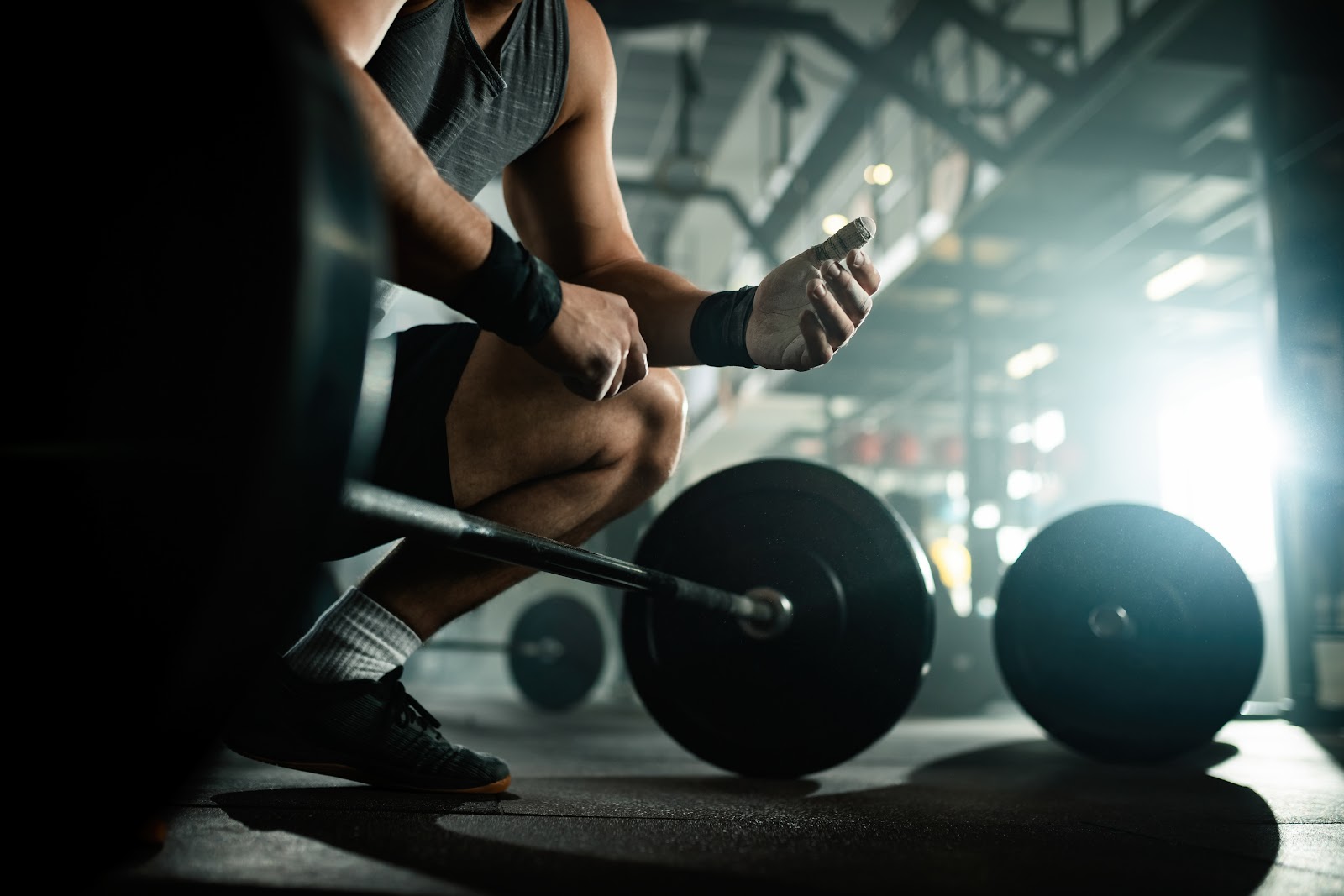
One of the existent prejudges is you can't get at hgome the same results like at the gym because we don't have enough equipment, or we simply don't have any.

Of course if you pretend to be a top-profile athlete, this reason probably could justify. But if your purpose is keeping fit or recuperating it, the creativity is more important than the complexitty.

The universal thing applying to the training at the gym, at home, outdoors, wherever, is dividing the body into key muscular groups: shoulders, arms, chest, back, abs, gluteus, tighs, and calves. Then, your training plan must consider them all, full, focused, in-circuit.

The general or full-body routines look for activate you from the top to the base with exercises working more than a muscular group at a time, with relatively acrobatic movements  (There are all-dificulty levels), those can be used for gaining resistance as well as increasing power, acording to the quantitty and the intensity you take on.


As much as you go gaining more reliability on your routines, many times they end to seem without-apparel olympic gymnastics sessions. Don't feel bad if the trick goes no good at the first attempt. You'll have to practice it until getting it. The results will appear in the process.

[READ ALSO: Aerobics at the beach]

The focused routines are concentrated into a determined muscular group or a couple of them each session, and they are usually used in the power training, the ones looking for strength and volume gaining, in other words.

The in-circuit routines are referred to the ones methodically focused  in some or all muscular groups each session, alternating them to take advantage out  of the resting moments. In other words, in one same session you can start with an exercise for tighs while you don't do anything with your arms, then when you leave doing tights go to the arms, and when you leave them go back to tighs or go to the back, then you do calves.

The functional training is a good example of in-circuit training although it's not the only one. Remember that one of its advantages is it takes up what be around you, turning into accesories for doing each exercise, from your own body weight tover the soil to  the furniture near you.

Yes, a chair, your bed, a small fence can be useful for this purpose.

if you have acquired or have access to any type of training home machine, it also can give you too-notable advantages like if you were using a dozen of them at a gym. Some personal trainers are too capable than inclusive teach you  to adopt certain angles with your body, so a 40-pound  weight look like a 120-pound one, reaching significant results (that's why we said you have to ask well before having a home advisory).

Some people can make their own training apparel or accesories as barbells, those are perfectly valid. The same thing if you buy them at a specialized store. Keep in your mind that if although how is important, also are important what, when, how much, where and why.

what Routine Can I Do?
If you already solved the whole prior details, you can start on moving.  Whether apparels or accessories, or not, the key parts your training session have to include are the warming-up and the routine itself.

Although we are not fans of the rigid formulas, if you insist on knowing what type-routine you could follow up, here we give you one, which you can changing as  you gain more power or resistance.


Warming-Up:
- 4 sets of 10 crunches (if you do them over the soil, remember to protect your back  with a pad or many clothes muffling  and not pressing your skin).
- 5 minutes of static trot or running (if you don't have a walking machine, you can help by using a back chair for not going forward or reverse).
- 15 to 20 pushes on the wall.

Arms, includes shoulders and torso (chest and back):
- 4 sets of 12 push-ups (with hands unite you work out pecs, hands aligned to shoulders work out shoulders with your arms, you work out the back if you put your hands a wide distance.)
- 4 sets of 10 push-ups with feet raised over a sofa, a chair, or your bed (this demands a bigger dificulty, but as you set your hands like the previous exercise, you get the same work-out levels.)


Tighs and gluteus:
- 4 sets of 20 full squads (pushing down your buttocks as much as you can, and flexing up your legs not setting them straight, trying first your feeet unite, then quite separated, and finally widely separated.)
- 4 sets of 15 jumping flexes, whether the feet unite or alternating one foot forward and the another one behind.
- 4 sets of 10 one-leg squads, while the another one is extended  behind for pushing your gluteus when you flex down; then, you do other 10 with the another leg.
- 4 sets of 10 strides.

Calves:
- 4 sets of 30 lift-ups, putting on your toe tips over a step letting your ankles suspended in the air, those you'll lift-up and lift-down (try to hold something  for not losing the body balance.)
- 4 sets of tip-toe walk during 1 minute (our executive editor says you probably will be gotten wrong, but it actually work out your calves.)

We repeat that if you have machines, aparels or accesories at home, you can reply the same movements like at the gym. They work exactly the same. You can also can combine them to the non-apparel training we suggest lines up.

And finally, ever remember the exercise without a balanced diet, enough resting neither, will be useless for you.