martes, 1 de agosto de 2017
How to make the perfect goal
By ChulucanasGym
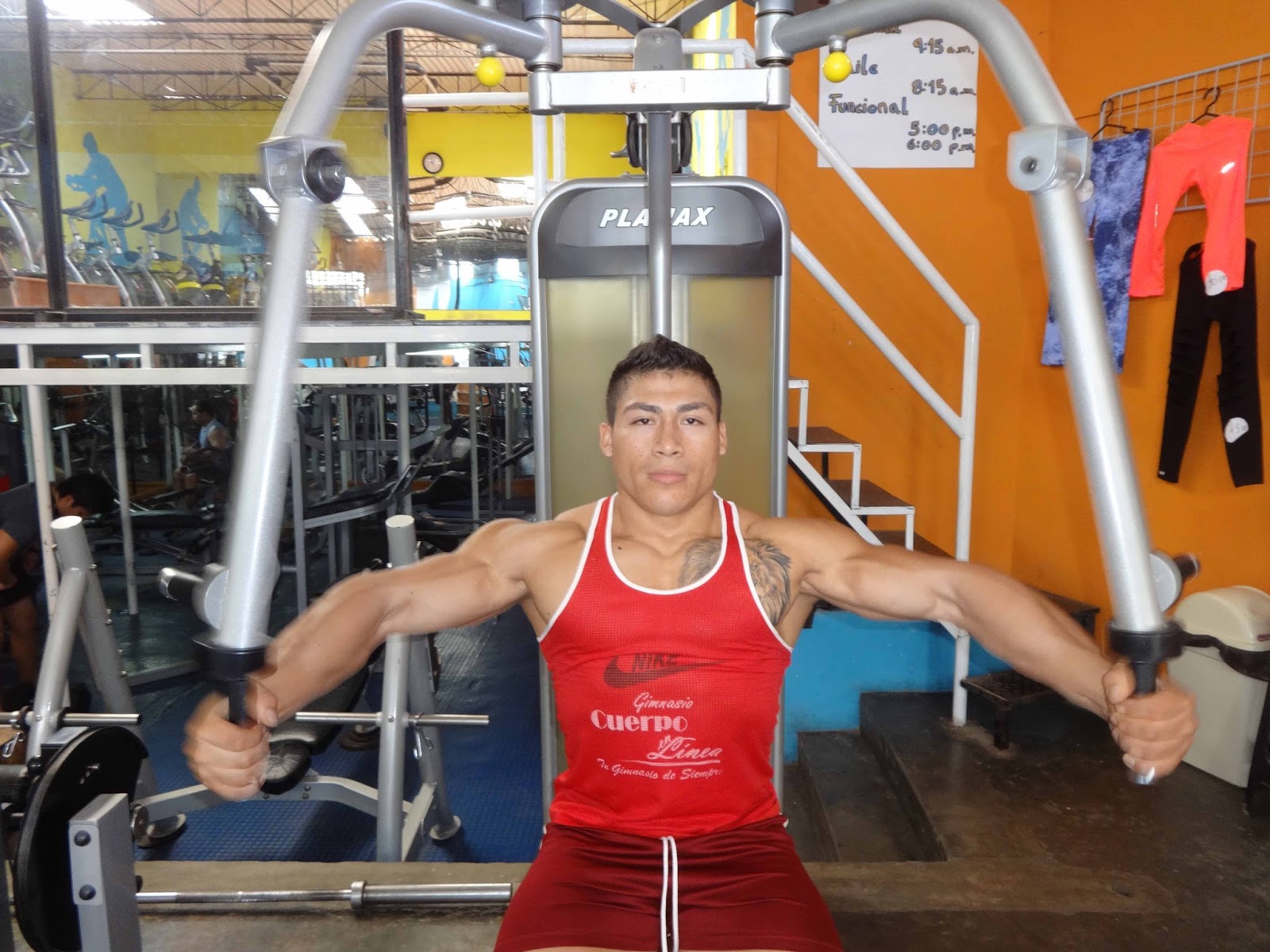
Photos by Roberto Saavedra / La República.
pedro Bautista is the most admired and followed soccer player because he's one of the 2017 season's top goal scorers in the Peruvian Second Division. But, how does he do it? It's not only about having very good muscular reflexes in the legs, or having them well-developed too. There are more playing factors.
That's why we looked for this Lima-nativeParachique's Defensor La Bocana (Sechura, Peru)forward, who just turned 30 years old, who's 5 feet 9,7 inches, who's 163,1 pounds, and who's recently signed in Nueva Cajamarca, Peru's Unión Comercio first division soccer team, to share us his sport secrets and advising us about. Are you ready? Take note, apply it in your life.
1. enjoy the training:
It's true when Pedro is preparing for his next match, there are some achieves and tasks to be gotten, those got to be gotten. But if he creates a stressing, agressive environment, the most probable is he feels the training as un uncomfortable duty instead of a nice duty. "It's important working joyful," he affirms. "Things get better that way."
Pedro never forgets the camaraderie into a collective sport, like soccer, is crucial if he wants to get the best results. "I enhjoy with my team mates everyday, , trying to be a family," he says.
2 Care yourself:
what all sportman shows in public has to be muchly with decisions he takes privately, and for Pedro Bautista they start from two key decisions: "eating healthy, sleeping on time."
Regarding the first, he ever watches his diet to be correctly balanced according to the sport activity he does, or that he needs to correct for reaching the excellence.
The second is something that people uncare often: sleeping all the hours you need to sleep replaces energy and activates progressively the mechanisms for your body to assimilate what you eat, what you work out. If you keep awake overnight, don't wait for prime results. Remember it's suggested 8-10 hours of deep sleeping to reset you up and getting ready for the next day.
3. Think of the one you love much to:
It seems to be a vain romantic advice but it works actually, and it works better than any booster. Thinking and get inspired of the person you love much activates a set of hormones inside your body, like serotonines, those will keep you ever good-humored, and higly motivated to give your best when you work out, or when you start to play on the field, or when you compete on the stage, or show up what you are made of.
It's better to be focused on the everlasting affection, not short. In Pedro's case, that inspiring love is his son's: "The greatest motivation is my baby and it's who leads me to be a better pro everyday."
And remember - there's ever somebody loving you and loving you good. Give yourself the time to meet that person, to enjoy, to learn sharing the quality of every moment, and to turn that energy in your own motivation.
4. Don't believe you're perfect:
A sin we all use to commit is arrogance, more if you're a sportsman, much more if you're a successful sportsman.
Look! One thing is having self-steeme, another one is boasting. The first one ever means I have pretty clear the concept that I have about myself independently what the others think about me. The second one ever means overacting my possitive qualities as much as I'm not humble to recognize I also have a bad or awful side either (what I have anyway).
"Everyone never ends to learn in lifetime and I'm ever ready to learn everyday from my partners or coaches," Pedro repeats.
Ever remember that balance in your life is important, especially when it's about self-ranking and self-demanding.
5. Make a goal is passing straight to the net:
This tip is 100% created originally by Pedro and consists in figuring out that the net of the goalkeeping is another of your team mates who you have to pass the ball straight anyway.
Pedro says he uses it as a psychological self-motivation and it ever works him for scoring a goal (did we mention he's one of the best goal scorers of his league?). "Thinking that way I take out the stress when I stay facing the goalkeeping," he trusts us. "Everything's much easy."
Indeed, poor opposite goalkeeper... but, the soccer is so, isn't it?
6. Stay ripping your body after the workout session:
If you're a top-profile sportsman and your physical assets seem to be in full capability, ever remember not all is perfect because human beings are not totally perfect. Pedro knows it very well: "I try to strenghten [my body] giving it an extra, and beef up what I lack."
So, once your usual workout session ends, don't miss to give some additional minutes to verify and correct those parts or performance that is below the expected.
Of course, don't fall in vigorexia neither. Talk to your trainer or coach about and define what to do right there where it's really necessary.
7. Live happy doing what you love to do:
Yeah, it looks like a manthra, and actually it is. Nobody reaches the excellence on the field... if dislikes to do what does! In other words, imagine to do the things you don't like to do - would not be a long, slow suicide?
"I'm very happy because I work in that I love, what's playing soccer," Pedro remembers. "All the people doing the things they love to have a good performance in what they do," he adds.
Remember that it's not the same accomplishing a uncomforting duty for you than acomplishing a kindly, satisfaying duty for you. Nobody won't tell you how to make a difference if you don't know yourself, don't be exigent to yourself, don't test yourself, don't be conscius about the talent you've got.
And when is the best moment to start? Well, right now!
miércoles, 17 de mayo de 2017
Who do you wanna look like?
They're on the magazines or the web, on your mind, or just on your mirror - what's better?
By ChulucanasGym
When you begin to train into a discipline, as bodybuilding or fitness to have an example, is unavoidable we look for a reflex or a referent turning in our sport achievement's goal.
"I'd look like..." is an usual answer among rookies, who usually become researching the life of those referents in many cases, as much as they turn that wish for real.
Is this a possitive attitude? It depends, so let's analyse the three possible scenarios about referents: models, archetypes or self-lovers.
The models, by definition, are all referents who became to achieve as much as their names and images are strongly linked and placed into the discipline we practice. Many times, they are part of a fashion vogue, so the model who was the masses idolatry 40 years ago probably has been replaced by a another one as each decade or each time range has passed on.
The possitive: As assummed as a mentor, someone which good example is good to imitate in other words.
The negative: Believing that everything working for that one will work for me too, when the first we have to have in mind is any organism is similar to another one, even having a strong genetic influence.
The archetypes are the possitive ideas we have about someone or something, adding a set of specific or very specific characteristics about we consider as perfect. They don't ask about a brand necessarily but our own aknowledgement and what is reflected in designing our own idealization. Said another way, it's like having a model with a body but without a face in special, a name in particular neither. It's not a "I'd like to be..." but "I want to be...". In some cases, archetypers could look like some Dr. Frankenstein taking an arm here, a leg there, a torso beyond, so conceiving the human body as a set of exchangeable pieces in extreme.
The possitive: There's not an obsession to follow someone punctual but it becomes an addition of everything for creating someone quite different, inexistent, but turning into our best goal.
The negative: our archetype exceeding so much our expectations that turns into an unreachable obsession as much as it creates a guilt or frustration feeling.
The self-lovers don't see anybody else, think of an ideal neither, only go ahead as much as they can and their actual achievement is their partial or final goal, indeed. It's hard to assure if this is a symptom of much vanity, much self-esteem, or a rare hybrid of both, but they are not paying attention about anyone nor anything as a referent. They are their own model and archetype as well.
The possitive: It's possible they're more realistic when setting a goal not falling into the obsessive compulsion of being like somebody else.
The negative: They could fall easily into conformism as much as they don't set goals neither, only training for what comes on.
The advice for trainers and trainees is having the time to talk personally about their each one's sport tasks. The trainer must be much careful about not creating a profile who gets easily obsessed, frustrated, guilty or comformist. The trainee has to have in mind that training must have two aspects: discipline and amusement. If your sport activity is another cause of stress, then it is not becoming a healthy lifestyle.
Learning about myself knowing what my advantages and limitations are, knowing to work them in my favor could be the starting point for everything. Then, choosing a model, designing an archetype or being a self-lover will be a very personal decision based upon reason instead of emotion.
sábado, 17 de diciembre de 2022
It’s time to set you up goals now
You already got engaged to the training, everything suggests you don’t want to leave it – what it comes up next?
Did the big ones of the bodybuilding & fitness begin being big? Not, they didn’t, definetely. Although there’s no general rule, the most probable is they have begun like wondering, that they have became fond of it when they saw the first results furtherly, and that has made him enthusiastic for going to climb more and more.
Maybe someones decided to go
upgrade, they started to compete professionally achieving local, then national,
then international titles. At this point, it’s important to say such as achievement were
not a gambling result but a strategic planning which steps were accomplished
little by little. That’s called achieving goals.
If you just entered the
training, you maybe don’t see it so clear. If you have certain time, you could
consider it as a possibility. But if you feel you have reached atop, it’s
probable you feel everything begins to become routine, no much expectation. And
if you get boring, the most probable is you end to leave it.
You need a strategy
The best way to avoid a
desertion in short or medium term is set you up goals or progressive and
logical arrival points along the time those mean not only physical development
but keepers of the wellbeing
sensation you have achieved at a first time.
If we have an arrival point,
we logically have a starting point, and that is your actual status: what your actual body measures, what
the diet you follow is, what your lifestyle is right now, even your health condition. Anyway, basis information upon a plan can be built. The
requirement is this data to be the most honest as you can.
From this basis information,
begin the process to set up progressive goals at short-term, medium-term, and
long-term. If you have the enough experience by training, take the all necessary
time to think and write this plan. If you don’t have that experience, sit down
with your trainer alone,
begin to outline all. If you don’t trust in your trainer, we leave you our
contact later.
But setting up goals is not
enough. To reach them, you have to get a set of sequential tasks those take you
closer time by time – the training strategy. What routine you will do
the first month, what routine you
will do the next month, and the next, and so until you reach your goal into a
right time.
And around the routine to
work you out, what diet you must follow up, what things you must adjust in your
lifestyle, and
what health indicators you must have in mind. It sounds boring, but when
somebody begins to know his body better, this turns a fascinating job. See it
that way.
When you get to your first
goal, analize what worked to you and what not, what you must strengthen and
what you must correct, take your measures again, check the diet, verify
your lifestyle, monitor your life condition. If all this give positive results,
award yourself and begin to work for the next goal. If you don’t get it,
continue fighting and don’t give up.
More practical actions
Although the trainer, if you
have one, is the prepared person to guide you in the process, we also advice
you have a physical and emotional support that allow you to talk, motivate, not
to give up. It can be a training partner, your best friend, a relative, somebody you ever can run to.
About this point, as we ever insist,
it’s not recommendable to follow the strategy of other person and apply it like
it were yours because two organisms, even being the same kin, don’t react the
same.
Ever do the exercise of
seeing yourself in the mirror alone and appreciate these little or big changes
you go experiencing and assuming them like your achievements. You by yourself
Will go telling us what it feels when passing through that experience. Later,
we’ll leave you the ways to contact us.
And, finally, it Will be ever
days which we are highly enthusiastic and others we don’t have motivation to do something. There’s no much
problem of the first ones. With the second ones, the challenge precisely
consists to overcome the discouragement and begin the training. If you let to defeat
by him, even a bit, it will go gaining land little by little and it will go
defeating you. And remember – you already got engaged, it’s time to go beyond
now.
You can send us your
questions or comment us your achievement and wondering by writing us on our Twitter account
or at our e-mail chulucanasgym@gmail.com
The photographs featured in this entry have been taken from bodybuilder César Quispe’s Facebook account.
viernes, 18 de noviembre de 2016
From hobby to local title
miércoles, 21 de agosto de 2024
The Importance of Celebrating Achievements Over Time for a Bodybuilder
In the world of bodybuilding, every stage of physical transformation represents a challenge that demands dedication, discipline, and patience. From long hours in the gym to careful nutrition planning, bodybuilders put in a tremendous amount of effort to sculpt their bodies.
However, amid this focus on continuous progress, a
fundamental aspect of the journey is often overlooked: celebrating achievements
along the way.
Acknowledging Progress
Bodybuilding isn’t just about the final goal; it’s a
journey made up of small victories. Every increase in strength, every
visible change in musculature, and every improvement in technique are
accomplishments that deserve recognition. Celebrating these milestones is a way
to stay motivated and remember that success doesn’t happen overnight but
through consistency.
Acknowledging personal progress also helps maintain a positive mindset. In a sport as competitive and demanding as bodybuilding, it’s easy to fall into the trap of excessive self-criticism. Valuing the achievements made strengthens self-esteem and provides a more balanced perspective on physical development.
Reinforcing Motivation
Motivation is a key
factor in the success of any bodybuilder, and celebrating achievements,
both big and small, can be a powerful motivational booster. When a goal is celebrated,
the brain releases dopamine, a neurotransmitter associated with pleasure and
reward. This release not only generates a feeling of satisfaction but also
encourages continued work toward the next goal.
Moreover, these celebrations foster a mindset of
continuous progress, where each achievement opens the door to new possibilities
and challenges. This helps maintain long-term energy and enthusiasm, essential
factors in a sport where perseverance is key.
Setting New Goals
Each celebration of an achievement is also an opportunity
to reflect on the journey so far and to set new goals. A bodybuilder who takes
time to celebrate their achievements is also better prepared to define the next
steps in their evolution. This process of reflection and planning is crucial
for sustained growth in the sport, allowing each victory to become the
foundation for future success.
Creating a Healthy Balance
Bodybuilding, like any other high-performance sport,
can be mentally and physically demanding. The pressure to constantly improve
can create stress, which could affect both mental health and physical
performance. Celebrating achievements helps maintain a healthy balance between
the ambition to reach new goals and the need to enjoy the present.
Taking time to celebrate doesn’t mean stopping
progress but rather acknowledging the effort made and enjoying the journey.
This balance between hard work and reward is crucial to avoiding burnout and
maintaining a positive attitude over time.
In summary, celebrating achievements over time is an essential part of a bodybuilder’s journey. It not only reinforces motivation and helps maintain a positive mindset but also provides the necessary balance for sustainable development. By valuing every milestone reached, bodybuilders can keep their momentum, enjoy their accomplishments, and continue moving toward their goals with greater enthusiasm and determination.
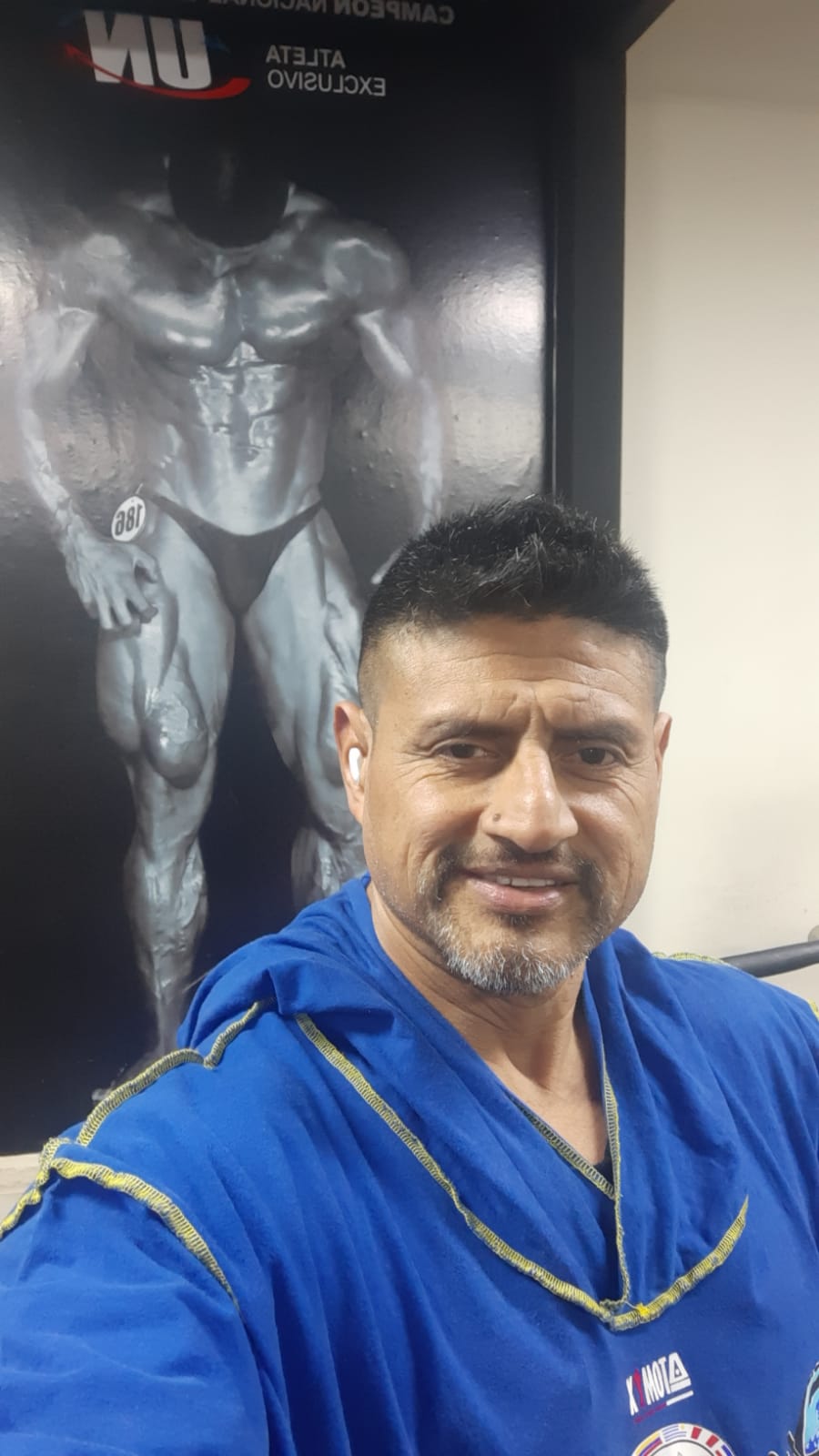
The model for this entry is José Escobar.
Follow him on Facebook and Instagram. | Follow us on X | WhatsApp | chulucanasgym@gmail.com