Mostrando las entradas para la consulta leg ordenadas por fecha. Ordenar por relevancia Mostrar todas las entradas

viernes, 18 de octubre de 2024

Key Muscle Groups for a Harmonious Physique in Bodybuilding**


When you venture into the world of bodybuilding, it’s natural to focus on developing big, strong muscles, but the real challenge and goal lie in building a harmonious and balanced physique. Having a symmetrical figure will not only help you stand out in competitions but also help you maintain a healthy and functional body.

Here are the muscle groups you need to work on to achieve that desired shape!

1.  Pecs: The foundation of a powerful upper body – The chest is the focal point of the upper body. Well-developed pecs give you that voluminous, athletic look that stands out in any fitted shirt. Spend time on exercises like bench presses and flyes to achieve a defined, broad chest.

2.  Back: The key to the famous “V” shape – The back is one of the largest muscle groups and often one of the most neglected. Developing the lats will help you achieve the coveted “V” shape, adding width and depth to your physique. Lat pulldowns and barbell or dumbbell rows are your allies here. And don’t forget the traps—well-developed traps add visual bulk and strength!

3.  Shoulders: The touch of width— Strong shoulders not only increase your appearance of power but also harmoniously connect the torso with the arms. Work the deltoids in all their parts (anterior, lateral, and posterior) to avoid imbalances. Presses and lateral raises are key.

4.  Arms: The perfect combo of biceps and triceps – Well-developed arms are always admired. But to have fully developed arms, you need to focus on both the biceps and triceps. Exercises like barbell or dumbbell curls for biceps and dips or triceps extensions will help you maintain balance between both muscles, achieving an impressive aesthetic.

5.  Abs: Definition at the center of the body – A sculpted abdomen is the hallmark of a well-worked physique. It’s not just about aesthetics; strong abs provide stability in other heavy exercises. Incorporate variety: from crunches to planks, to achieve a strong, well-defined core.

6.  Legs: The foundation of any great physique – Voluminous quadriceps are fundamental if you want a complete and proportioned physique. Well-developed hamstrings balance the volume of your legs and protect you from injuries. Squats, leg presses, and deadlifts are essential to making your legs as impressive as your upper body.

7.  Glutes: Don’t underestimate them – In bodybuilding, well-developed glutes are crucial for a strong and balanced physique. They help improve your posture and shape the lower body. Exercises like hip thrusts and lunges are key for developing this area.

8.  Calves: Don’t neglect the details — Calves are one of the most challenging muscles to develop, but well-developed calves complete a balanced figure. Include calf raises in your leg workouts to ensure this muscle group doesn’t fall behind.

Why is balance important? – It’s not just about having big muscles; what will make you stand out is a proportioned physique. A harmonious development will help you avoid injuries, improve your performance, and, most importantly, achieve a visually pleasing body. Working on each muscle group in a balanced way will not only make you a bodybuilder but a complete athlete.

Stay motivated to keep improving! – Bodybuilding is an art, and you are the sculptor of your own body. Don’t just focus on the muscles that are more visible or easier to work on. The key to success lies in balance and consistency. With every workout, you are one step closer to your best version. Remember: true strength lies in balance! | Follow us on X | Write us at WhatsApp | chulucanasgym@gmail.com 

miércoles, 24 de noviembre de 2021

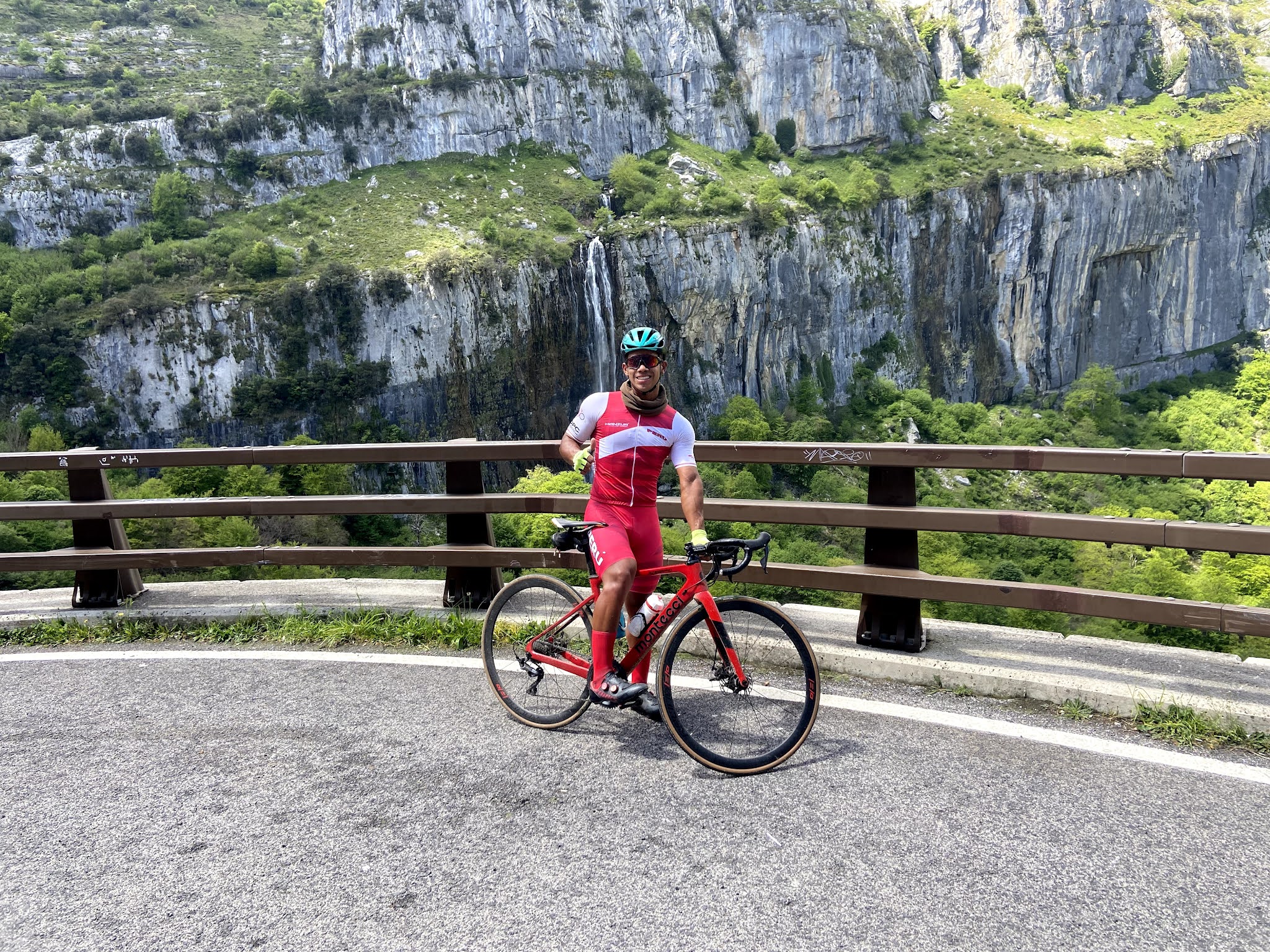
Robinson Ruíz – At least just once in lifetime

Interview by Nelson Peñaherrera Castillo, special to ChulucanasGym. Photographs Courtesy Robinson Ruíz.


Getting to a very important tournament like the 2019 Lima Pan-American Games costed Robinson Steven Ruíz Calle (Chulucanas, Peru, Sep. 5th, 1998) to stay far away his homeland for training properly, and giving time to extra-sport activities such as working at a restaurant, gathering plastic bottles, or giving maintenance to bikes, but he got it – he got for Peru and for himself, a bronze medal in road biking. His speciality is track speed.


Although he initially trained at his hometown, he might move to the other side of the nation for perfecting, in Arequipa, where the High Performance Center is located, and one of the major biking hotspots in Peru. In that same place, another highlighted biker trains, his older brother Hugo Ruíz. Was all that effort worthy?  His name already appears in the international records of biking. We talk to him while he rests from one of his most recent competitions.


Since how old do you do biking, already in competition mode?

Since I was 17 years old.


Have you ever done biking or have you do other sports?

I began in soccer when I went to the school, and I also highlighted in athletics, but I felt they weren’t for me.


So, how do you get to biking?

Because of my father and my older brother Hugo, whom I admire much. He began in biking. He did it before than me.


When you did
athletics, what tests did you highlight in?

In 100 flat meters.


And that test is more power instead of speed, isn’t it?

Yes, it is so.


Then, you have got the speed and resistance of soccer and you have got the power of 100 flat meters, and a good leg is necessary in both. How did that help in biking?

So, since I was a child, I was very disciplined in my trainings, whether in soccer, athletics, or biking. And I’d add genetics to that, not dismissing the hard work for sure [laughs].


What factor of your genetics do you believe it plays in your favor?

I think I have some runner skills, reaching good speed peaks in short distance, and a good power management by Nature, and the ease to gain muscular mass. I add to that much pure resistance work, resistance to power and speed.


How do you get to 2019 Lima Pan-American Games?

After a set of selectives to all pre-selected athletes, who highlighted the most in different resistance and speed tests were selected. I was one of the chosen ones.


When you arrived, what was the first thing that came into your head?

The first thing I thought it was my first and last chance to show the class in home. I like much to do something thinking it will be the last time I do it. It makes me to deliver 100%.


How much did that thinking way work to you?

Well, the truth is I continue applying it in every phase of my life. I believe it helps me ever, it turned me into a very passionate, dedicated man. It’s about the life is too short and someone doesn’t know where someone will be tomorrow. The road biking is a sport that is not respected in Peru by the drivers, there are road accidents risk ever.


You took an interesting issue. There are campaigns asking to respect the bikers everywhere, but it seems the engine vehicles drivers don’t understand it. How do you feel about?

It’s something very sorry that fills me with much impotence and anger. It’s easy for them to take a seat in the safety of a big vehicle that protects them. We go on a bike – the only stuff protecting me is a helmet. I demand respect to the life of us, the bikers – five feet distance wwhen you want to pass beside me, that’s it. You can lose a minute of your time and passing in a safe way for us. We can lose our whole life full of goals, dreams, and along.


Also, the bike produces zero polluting emissions to the atmosphere and it’s a recommended exercise to keep the health of body and mind, isn’t it?

Right, my buddy.


You talked about a life of dreams and along. Where has the biking got you to, and if did you ever dream at least to get until there?

Once upon a time when I was a kid, I dreamed much to be featured on TV riding on my bike with all these professional bikers who run the tour right there in Europe, and because of the work and constancy, the biking gifted me that opportunity by participating in the San Juan Tour, a classic in Argentina where all the professional teams participate. The dreams are to be accomplished and they can make real, indeed. I’ve known places I never thought, diverse countries, cultures, moments, friends, experiences I will keep forever.


Please, mention these countries, aside Argentina, and don’t forget anyone.

Panama, Colombia, Costa Rica, Dominican Republic, Venezuela, Spain, Mexico, Bolivia, Chile. These are what I remember.


Almost all Iberoamerica. To finish for now, I remember when we met your brother Hugo, one of his major challenges was getting a sponsorship and it was very hard. How was it in your case?

Well, I took a part-time job a little time ago to fundraise some trips to certain competitions. It still continues to be a challenge for me [laughs]. I don’t travel to all the rides because the budget lacks – biking is expensive.


But, do you know what you have, aside the genetics? So, the pride and the enthusiasm. I hope more people look at your work and your colleague bikers’ because the international results you get really makes worthy any funding.

Thank you very much, buddy.


You can check out the international records of Robinson
here. Also, follow him on his Facebook and Instagram accounts.


Do you have a similar story? Write us at chulucanasgym@gmail.com or contact us on our Twitter account. 

miércoles, 15 de enero de 2020

How to succeed despite the difficulties

 Mario Kanashiro has got an excellent justification to celebrate. He just upgraded as a Master Trainer for the entire Japan in shaka-dance, dance classes combinating hip-hop, African, music hall  with acardio-vascular workout plan. In this new position, he’s in charge of granting the licenses for trainers who teach it.


“Here In Japan, there is more work life than personal life or to relax,” this Peruvian born in Lima City, on November 12th, 1990, comments. He had to migrate with his family when he was just 5 years old. Today, he’s an athlete full of charisma and love, but almost a decade ago, he was totally opposite – sedentary, apathetic, selfish. What happened to his life that brought him out from darkness to light?


Until he was 21 years old, he worked in NTT, one of the largest Japan’s phone companies, translating from Japanese to Spanish and viceversa. “I didn’t, had no intrest on any sport neither; in fact, I had no physique.”


Since he was 20 years old, he began to feel the whole right side of his body lulled: “I felt pain from the neck to the right hand, and I was losing power and sensitivity in my right leg and foot.” He attended two hospitals for an exam, but the surveys didn’t find problems in his muscles and bones, as the first suspicious was. In fact, he has them well formed.


There’s ever a before and an after
The surveys showed a rare anomaly in his neck’s veins just around his second vertebra: they were very narrow, complicating the blood flow, so they didn’t favor a good oxygenation of the body. The surgery was the only way to correct it. However, this procedure was not enough for him to recuperate the mobility of his ends. That’s why he had to go to physical rehabilitation, and the sport was the solution: “I started to build muscle in arms and the hand for having strength when I catch by using low weight; I also did stretches”


During the process, he took a zumba class, he realized he could dance –very well—and he liked it a lot: “I didn’t know to dance, it didn’t provocate me, it didn’t call my attention neither, despite I played the electric guitar between 16 and 20 years old… I performed rock and metal, I even play it good today – I’ve not lost the technique.” He followed to develop as a trainee until he prepared to be a trainer, and the rest is history.


“As for playing guitar you must listen to the drums and the bass, your ear achieves sensitivity for bass ranges, and it’s the same guide I use for creating choreographies,” he explains. “I’m going to be 7 years this year, holding dance classes and training that – I continue to do stretches, I do functionaltraining, and I play video-games in my free times to relax.” Inclusive, Mario sometimes trained weights.


The benefits to his organism have been dramatic: “Before, I ran 1800 feet or 3300 feet and I got tired, I run 4 or 6 miles today and I don’t get tired – I developed a good physique,” He smiles.


Growing takes much time
When Mario gave his first class, nobody attended. The next one, two persons attended. Then, five, seven, until he got his first 20-people group. Today, his groups are until… 40 people! Although it depends on the gymnasium he goes to, but his minimum doesn’t fall down 20 people. Even he lives in Nagoya, his work brings him through several gyms across the island, and getting a way was not simple to him due to the Japanese public prefers to support the Japanese trainers. The effort costed him six years.


“When I began, there were teachers who suggested not to attend my classes because I was a rookie, or the people could injury or I knew nothing of fitness,” he remembers. “Today, I’m the teacher of those teachers, and many get wide open mouth when they see the change, because I became better than them.”


“everyday, I can give classes to 80 to 100 people about,” he tells.  “70% of my pupils are women, so in a class, there are 3 men for every 10. When it’s morning or afternoon, the most are 30 to 60, 70 years old, but I have younger people at night, between 20 and 40 years old.”


Mario describes his pupils like in constant learning mode, like they’re attending to the school, and there’s something new to know everyday. “When I give three continued clases, I have the same pupils. For example, the first class is cultural dance, the second is fitness dance, and the third is hip-hop.” The cultural dances are those ones not available at the disco or in its original country, “and we put them difficult steps, so they can take until two months to learn an only choreography.”


And if he highlighted at dance classrooms, his mixed look has noticed too. One day after attending an event, somebody proposed him to be a model.  The only experience he had up to then was to be the cover boy of his high-school in promotional flyers and posters as well when he was a teenager.


“I signed up a talents school three years ago and I started to have many courses becoming to model HiBowl’s clothes. I was modeling until two years ago, but my career as a trainer became more exigent, so I do it very rarely.”


His casting was exigent too. His face or his body weren’t enough. As they learned he knows to dance, they included that test. But maybe the difficult part was an interview before five judges who examined absolutely everything: his best insights, his skills, even how he mannered. From 1000 people, only 80 passed.


“I’d like following to model clothes, but as I do sports, I’d like to model sportswear or dancewear, as much as I’m becoming known across Japan. If the chance to feature it appears, it would be great.”


 Bad times serve to improve
Mario sustains his better achievement until now has been learning to dance. Critics he had in the beginning pushed him to learn more, to get out his town and having classes, to perfectionate his style, to give his best to his pupils: “I take the critic to improve my work,” he affirms. “If the pupil says you something not to like, it’s not to bother but for you to improve.” He adds if when his work began he was very criticized, it was because he interested to many people.


“We live because of the clients – if there are no clients, there is no class, so you ever have to know how to listen to them,” he states. “There’s still people who prefers a Japanese teaching Latin music instead of a Latin teaching Latin music. I did mind it very much, but I learned now that if the people want to learn Latin music with a Latin guy, and they want to have my class, so have it. If not, they miss it.”


His veins narrowness faced Mario to his lifetime plan, and the answer was to encourage, although that was not easy in the beginning: “The doctor said me raw straight on my bare face that if I did not do the treatment, I was becoming worst. Then initially, more by the pushing of the doctor instead of myself, I went to the gym.”


Despite he overcame his condition so successfully, some sequels are remaining – his right hand is weaker than his left hand (so he prefers to carry stuff with the second one). Sometimes, he feel  an inner itch in the right arm followed by a redness, what can happen when he drives his car or when he’s holding a class. Fortunately, he attends his controls every two years (initially, they were monthly and they were elapsing progressively), and he continues to meet the doctor who encouraged him to take the control of himself – Sensei Izumi.


 You grow when you validate and share what you learn
“My another achievement is my trainee has become a trainer, that has taken the same motivation and the same opportunities,” he comments proudly. “Four of my pupils are trainers now.” He specialized in shaka-dance, got his license, and became to give classes with that same discipline’s creator Samira Talha, across Japan in July 2019. And Talha herself was who chose him to go with her: “ I felt happy and nervous as well, because I never thought  I was to work so.”


While we were producing this story, Mario was upgraded to Master Trainer. “I couldn’t believe it, but I understood that everything turns around, that it was because of the time I hhad dedicated to my work,” he says us in exclusive. “When I see in retrospective, I realise that everything happened to arrive to this very moment, and I follow to learn. Samira says us that we must follow to study and go up, despite the position we get.”


“Up to before my illness, I used to be very selfish and negative. I got angry to the people who loved me. When I got sick, I knew what my family and my friends –two— were, who never missed me to visit, despite I knew a lot of people. That was when I realized who loved me and who didn’t, and I started to value more my family and true friends, I started to change because I felt I might give back all that love.”


Business are business… until certain point
“When I began to work, I had no explanation about why the people paid 500 yens, equivalent to 5 dollars, to have a class, when I was not sure if I was doing it well, until a female pupil said me that she came to my class because she felt she was learning. Then, I realised I was rounding myself with people motivated to learn, who saw me to make a new step, and asked me how to make it,” he meditates. “I understood  that for the people, it’s important what I can teach them.”


“That made me to opened my heart, and I turned back to believe in the people, because I left to believe in the people,” he adds. “And that made I valued myself much more, because inclusive I came to think I wasn’t important.” His pupils affirm Mario has a very special energy, that allows him to empathize and feel comfortable with any person, even who envy him, and even them who have come to enter his classes for getting him out of the way, unsuccessfully.


“That’s why we never have to give up, ever have to follow learning,” he says. “There are people who can do some things and can’t do other ones, but to get them, you have to practice them. That learning and that love I put it on is what the people like.” Mario also encourages his pupils to develop their own style instead of copying his, and to practice it hard until getting it. “And they play their part.”


“Another issue is this is a business for real, and there are teachers who study to make money, but you have to identify in your work what thing is actually money and what thing you have to study to have a profession. I can have one only person in my class, as well as having 40. Of course, if one attends, I can dedicate 100%, and if more arrive, I have to deliver it, but ever focused on giving my best.”


In fact, Mario shares his art on his Facebook, Twitter, Instagram, and YouTube accounts. So if your want to learn more about him and he does, contact him, no matters wherever you are.

lunes, 13 de mayo de 2019

You can control this way if your body improves or not


Everyone who goes to the gym or does any type of training  is expectant about his or her progress. Have I overcome something I couldn’t overcome before, am I on the same spot when I started, or, in the worst scenario, am not I closer where I started neither?


The problem about measuring our progress is how much objectivity we put to our appreciation. In that sense, the first mistake we use to commit is trusting in the bare-eye, in what we see on the mirror, and almost never the diagnosis we get is reliable. Then, the prognosis we set uses to be wrong.


Is there any objective form to control our progress? Yes, there is. The anthropometrics is the discipline that helps us to have information adjusted to the reality on we can do our analysis and set up our strategies for improving or correcting our physical achievement. This information must be key for your and your trainer at the time to define if it’s necessary to adjust the training routine, the diet, the lifestyle in general, or everything.


Coming up next, we introduce you those key indicators you can control from your home, inclusive, and those will give you that objective vision about what is happening to your body. Look at the data you get – they can’t be taken isolated but grouped. So, the conclusions you arrive and the action plans you take will be more accurate than acting by simple supposition or guessing.


Height
This measure is basic because it serves to calculate other body measures such as absolutes, indexes, and percentages, we will talk about later. You can use a stadiometer, that is the specialized tool in measuring your height, although you can also take the job to paste a measuring tape on the wall or to paint a number scale in centimeters (or feet and inches in the U.S.) setting the ground as the point zero.


Next, take off your shoes, raise naturally, stick your body to the stadiometer or the wall column. Over 20 years old, the height is unvariable for both sexes, at least until the senescence when it can reduce because you will lose bone and muscular tissue.


Body Weight (BH)
It’s a first progress indicator, but alone is not enough because it only will say us if we have increased or have decreased respect to the last measuring. However, it offers us first clues.


The manner of taking it is as easy as put you up on the weighing machine and waiting for the reading in kilos and grams (pounds and ounces in the U.S.). What you have to be careful for sure is  how you take your weight: you ever have to take your shoes off and put on the device; don’t worry about your clothes (if sportswear) because the adding increase is irrelevant, unless you’re a professional or contesting athlete or bodybuilder, and it will be actually necessary you take off almost all your clothes or get naked for having the correct number. Of course, it will depend on how much privacy the place has and how much you trust in the one who could be with you.


The bathroom weighing machines use not to be much accurate as the clinic weighing machines that might be at every good gymnasium. Some electronic devices are only reliable as much as the manufacturer warns it so; then, read the instructions carefully before considering it as reliable and compare many readings taken with different devices to know what is the most accurate. In the same way, we suggest you have a monthly or biweekly record of your weight. Some trainers probably will demand you to have a weekly control if you’re training for a competition. Obbey them.


Absolute Body Measures (ABM)
We call them absolute body measures or ABM because they give us advance or slowing down indicators what only apply to our body as much as parts of it have got wider or have got thinner than a previous control. For that, what interests us is to have countour or perimeter measures expressed in centimeters (or inches in the U.S.), those put in a table give us a mathematical idea of your body volume. Who are dedicated to be models or bodybuilders or athletes know perfectly what we mean. However, a proffessional physical trainer will have here compplementary information to the BW  through he or she can evaluate the effectiveness of the training plan, the diet, or the lifestyle.


The best manner to take these measures  is by using a measuring tape that is put over the skin, not stretching it or releasing it too much, but letting it adjusts naturally to the shape of your body. The precission of the measure gets when the tape makes direct contact with your skin. If there are clothes between them, the excess must be depreciated or definetly avoided. Another trick, if you want more precission, is taking the measure before having meals or starting your training session. And if you still want more precission, take three measures of the same zone and then go to have the average for eliminating the excess or default error.


The measures are taken on specific areas of your body. Remember we need to know the contours, in other words you have to take the measuring tape and round each part of the body, going around it. We are not interested on lineal measures (as taken in dressing), we want to have an idea about volume. The places where those measures are gotten:
  • Shoulders: Take as reference the part where it is seen more prominent and put there the start line of the tape. Then, pass it under your two clavicles until arriving to the most prominent part of your another shoulder. From here, make the tape to run over the upper part of your backuntil meeting the pointwhere the tape begins. For you to have an idea if you have taken the measure correctly, if you’re a male and you’re 170 centimeters or 5 feet 7 inches height, your shoulders perimeter should be between 118 to 120 centimeters or 46.5 to 47.1 inches. However, this measure is relative according to your age, body shape, and sport goalds.
  • Chest: Whether you are a male or a female, take as a reference the part where it is more prominent (probably the nipples in both cases) and go the tape around you including your scapulas. For the women, taking this measure will be easy because it belongs to the same like the bust contour, very required in dressing or beauty contests. If you’re a 170-cm or 5’7-feet male height, your chest contour could be between 106 and 108 centimeters, or 41.2 and 42.5 inches, but we remind you the measures are relative, as we clarified you on the previous point.
  • Arms and forearms: The biceps and triceps allow your to know how you are in arms, so you will have to round them at the same time with the measuring tape and take the reading. If you’re a male 170 centimeters or 5’7 feet height, it is possible your arms grow until 38 or 39 centimeters, or 15 or 15.4 inchescontour. In forearms case, take as a reference its most prominent part and put you the tape around, although this measure is almost never used.
  • Waist:    In the males, it’s taken as a reference a point 3 centimeters or 1.2 inches below your belly button, and in the females, the zone where it becomes strechest, 2 centimeters or 0.8 inches above the belly button in general. Then, you take the tape around including the lower back in the case of males and the medium back in the case of women. The World Health Organization recommends the males should not be more than 95 centimeters or 37.4 inches waist contour, and the females no more than 65 centimeters or 25.6 inches, although not much because of a beauty criterion but preventing many conditions caused by the overweight and the obesity.
  • Belly: In the case of women it’s the same than the taken for waist in men. Basically, it looks to know how much flat your belly is, in mathematical terms, obviously.
  • Hips: In male as well as female, it’s taken as a reference the most prominent part of your gluteus, rounding both sides where the pelvic bone is more prominent, passing over your pubis. If you’re a male (and adding the squads, your genetics helps you too), it is possible you reach 102 centimeters or 40.2 inches contour if you’re 170 centimeters or 5’7 feet height.
  • Thighs: It’s the section of your leg that begins in your pelvis and ends in your knee. Look for its widest part and round it with the measuring tape. Look! You have to take just one thigh per measuring, never both at the same time. If you’re a male 170 centimeters or 5’7 feet height, your thigh can be between 59 and 60 centimeters or 23.2 and 23.6 inches at least, although it’s going to depend on your kind of training. What is clear, indeed, is that for every 3 centimeters or 1.2 inches of thigh you get, your arm can not be more than 2 centimeters or 0.8 inches.
  • Calf: It’s the part of your leg between your knee and your ankle. Look for its more prominent part and round it here with the measuring tape. As equal as the thigh, both calves never must measured at the same time but one at once. If you’re a male 170 centimeters or 5’7 feet height, your calf can be 37 to 38 centimeters or 14.6 to 15 inches at least. Yes, at least.


Indexes And Body Percentages
If you think it’s too many Maths for today, we have not finished yet. There are more specialized indicators those allow you to measure your progress, especially if you are in a professional or competition training environment.
  • Body Mass Index (BMI): Basically, it gives us a more accurate idea if you are your ideal weight, or if you are overweight or in obesity. It is calculated by dividing your weight in kilos by your height’s square. Let’s suppose you’re a male 170 centimeters (1.7 meters or 5’7 feet) and you’re 70 kilos (154.3 pounds), your BMI will be 24.2 – it’s inside the healthy.  If it would exceed beyond 30, we could talk  about obesity.
  • Body Fat Percentage (BFP): It’s a more specialized measure that, as its name says, looks for knowing if there is a healthy balance between the body fat you need for your vital functions and the fat you store to do your elective functions –we mean- as training. Here Maths are not enough but we need to use special procedures and devices for having us a reading. It is obtained by multiplying the quantity of your body fat by the quantity of your body mass and all that divided by 100. Women will ever have a BFP greater than men because some fat is reserved for reproductive functions. About percentages, it is considered that athletes go from 10% to 15% depending on the physical activity they do. A professional trainer will educate you about how to control your BFP for optimizing better your training, although will combine it with diet and improvement in your lifestyle. In fact, it is probable this catch more attention.


So, if you only trusted in your mirror, your weighing machine, or your measuring tape, you see we have to combine all this and much more in the end if we want to measure progress. And, by the way, it’s not a bad idea you feed all your data on an electronic  spreadsheet that allow you to view graphically if you improve, you keep, or you need to work harder. Yes, it’s a lot of work but you deserve it well. It also will give you more conscience about you, especially if you add some psychological advisory to see if there is any motivation problem, or something like this.


Like everytime, we will be pleased to know your questions here on the comments, or on our Twitter account, or by writing us at chulucanasgym@gmail.com


The models featured on this post are Pedro Changanaquí, Fran Checa, Alfredo Rivera, and Anderson Sandoya


miércoles, 20 de junio de 2018

Home Training


Is it possible to get the same results than if you worked-out at the gym?

By ChulucanasGym

Despite many posts say on the net, training at home is an option for people who don't have enough available time for attending a gym but could have the necessary will power to enter one.

It's also a choice for the ones who dont have enough money to pay a membership due to different reasons, but who also show up the enough will power to reserve a part of the day for keeping fit.

And the will power could be the starting point. If you don't have the enough motivation to schedule an hour of your day, or to set up the time for working out, you won't do anything.  Surely, you can request your best friend to visit at home for doing both together, but what would happen the day that friend can't attend?

Missing the training might not be your option, so the cause that motivates you must break out from yourself, in the beginning.


Define Your Goals
The question everybody asks is what exercises can be done at home, and the answer is before designing a routine, set up your physical achievement goals first: losing weight, keeping fit, increasing mass (yes, it is also possible).

Unless you already have previous experience with a supervised training at a gym (what trends to develop discipline), it would be worthy to invest in a personal trainer who helps you to set up those goals with greater objectivity and based upon science, biotype and body measures in other words, so the diet you use to have and you can optimize, and another relevant information as well.

Look for many opinions before choosing a personal trainer. The ideal is that one becomes a companion along your whole training process, but if your budget don't allow to, that could help you to start up with your first session, then supervising you weekly, biweekly, or monthly.

Remember that although you can develop a degree of trustness and friendship with your personal trainer, the ideal would be the relationship to be strictly professional at the time of coaching on you.

Whatever the reason, if you are not available to have a personal trainer, you can write us down at chulucanasgym@gmail.com for providing you with remote orientation (online). This service we offer you is a symbolic cost.


You Need Space
Although there is not a general rule about the space you need for doing the training, the criterion we recommend is your own comfortability. Maybe you need a couple of square feet, or maybe you need a whole room, or even your home's full backyard. Depending on you, your routine, and the existent availability, you must determine how much space you're going to use while you work out.

The suggestion we do point out as universal is your space must be free of obstacles what could harm you during your sessions. Imagine you work out in your bedroom and  you have eberything messy on the soil. Probably you get wounded by your own clothes or damaging your stuff. So although the space be little, you'll get alright if it were clean and ordered.


Versatility
One of the main benefits of home training is you schedule your training time and don't depend on the gym times. It's possible there is one near your home but the time you chose is already full of students. Instead, that problem gets solved at your home or bedroom.

Unless your life activities have no beginning, end time or your schedule be irregular, you decide the time you'll start to move.

of course if you have control of your life, the recommendable is setting up a regular hour for training, maybe just waking up, but if that is not possible, it comes alright anytime free you have.

Another most personal aspect at home, and depending on the privacy degree you have, is you decide what you wear for training. Inclusive you can work out underwore or even Ancient Greek-style (naked).  what you do must consider is there are certain clothes favoring  determined routine types better, depending on your physical goals.

If you work out with music, another advantage is you can do it with that you like much. There is no consensus here about what the ideal is neither. use that motivates you  and can mark you a beat, especially if you do a resistance or functional training. A Bach's selection as well as the Rocky's music score are perfectly valid.

Another aspect that represents a home's advantage over the gym's is you won't have to wait  at any locker-room for free showers. After cooling your body, you go straight to yours and take a bath.

How Many Time Do I Need?
Another advantage of home training is if your time at the gym is very attended, you already won't have to wait for the machine or the space to be free, what means you a time saving. But if you think you need at your home the same lapse you need at the gym, go ahead.

if the time scarce is your enemy or your justification, at least set on 20 or 30 minutes. You can control it classic-style, watching a clock in other words, or setting up your mobile alerts. if you work out with music, you can take as a reference that 5 full songs (usually the radio-edit versions)  equals about 20 minutes.  If you add three more, you'll have the half hour.

In the morning, in the afternoon, or at night? The general medical consensus is when you work out early, just waking up, you charge endorphines for the whole day, those will keep you alert, good humor. You won't have any excuse to run away your own regime, by the way.

 However, we repeat, that adjusts to your own life train. The important is you be constant, that you never leave off.


With Or Witout Apparel?
One of the existent prejudges is you can't get at hgome the same results like at the gym because we don't have enough equipment, or we simply don't have any.

Of course if you pretend to be a top-profile athlete, this reason probably could justify. But if your purpose is keeping fit or recuperating it, the creativity is more important than the complexitty.

The universal thing applying to the training at the gym, at home, outdoors, wherever, is dividing the body into key muscular groups: shoulders, arms, chest, back, abs, gluteus, tighs, and calves. Then, your training plan must consider them all, full, focused, in-circuit.

The general or full-body routines look for activate you from the top to the base with exercises working more than a muscular group at a time, with relatively acrobatic movements  (There are all-dificulty levels), those can be used for gaining resistance as well as increasing power, acording to the quantitty and the intensity you take on.


As much as you go gaining more reliability on your routines, many times they end to seem without-apparel olympic gymnastics sessions. Don't feel bad if the trick goes no good at the first attempt. You'll have to practice it until getting it. The results will appear in the process.

[READ ALSO: Aerobics at the beach]

The focused routines are concentrated into a determined muscular group or a couple of them each session, and they are usually used in the power training, the ones looking for strength and volume gaining, in other words.

The in-circuit routines are referred to the ones methodically focused  in some or all muscular groups each session, alternating them to take advantage out  of the resting moments. In other words, in one same session you can start with an exercise for tighs while you don't do anything with your arms, then when you leave doing tights go to the arms, and when you leave them go back to tighs or go to the back, then you do calves.

The functional training is a good example of in-circuit training although it's not the only one. Remember that one of its advantages is it takes up what be around you, turning into accesories for doing each exercise, from your own body weight tover the soil to  the furniture near you.

Yes, a chair, your bed, a small fence can be useful for this purpose.

if you have acquired or have access to any type of training home machine, it also can give you too-notable advantages like if you were using a dozen of them at a gym. Some personal trainers are too capable than inclusive teach you  to adopt certain angles with your body, so a 40-pound  weight look like a 120-pound one, reaching significant results (that's why we said you have to ask well before having a home advisory).

Some people can make their own training apparel or accesories as barbells, those are perfectly valid. The same thing if you buy them at a specialized store. Keep in your mind that if although how is important, also are important what, when, how much, where and why.

what Routine Can I Do?
If you already solved the whole prior details, you can start on moving.  Whether apparels or accessories, or not, the key parts your training session have to include are the warming-up and the routine itself.

Although we are not fans of the rigid formulas, if you insist on knowing what type-routine you could follow up, here we give you one, which you can changing as  you gain more power or resistance.


Warming-Up:
- 4 sets of 10 crunches (if you do them over the soil, remember to protect your back  with a pad or many clothes muffling  and not pressing your skin).
- 5 minutes of static trot or running (if you don't have a walking machine, you can help by using a back chair for not going forward or reverse).
- 15 to 20 pushes on the wall.

Arms, includes shoulders and torso (chest and back):
- 4 sets of 12 push-ups (with hands unite you work out pecs, hands aligned to shoulders work out shoulders with your arms, you work out the back if you put your hands a wide distance.)
- 4 sets of 10 push-ups with feet raised over a sofa, a chair, or your bed (this demands a bigger dificulty, but as you set your hands like the previous exercise, you get the same work-out levels.)


Tighs and gluteus:
- 4 sets of 20 full squads (pushing down your buttocks as much as you can, and flexing up your legs not setting them straight, trying first your feeet unite, then quite separated, and finally widely separated.)
- 4 sets of 15 jumping flexes, whether the feet unite or alternating one foot forward and the another one behind.
- 4 sets of 10 one-leg squads, while the another one is extended  behind for pushing your gluteus when you flex down; then, you do other 10 with the another leg.
- 4 sets of 10 strides.

Calves:
- 4 sets of 30 lift-ups, putting on your toe tips over a step letting your ankles suspended in the air, those you'll lift-up and lift-down (try to hold something  for not losing the body balance.)
- 4 sets of tip-toe walk during 1 minute (our executive editor says you probably will be gotten wrong, but it actually work out your calves.)

We repeat that if you have machines, aparels or accesories at home, you can reply the same movements like at the gym. They work exactly the same. You can also can combine them to the non-apparel training we suggest lines up.

And finally, ever remember the exercise without a balanced diet, enough resting neither, will be useless for you.